
Living Memory
Oral Histories Archive
First-person accounts from the artists who built, expanded, and sustained flamenco in San Antonio and across Texas. These conversations preserve voices, memories, and artistic lineages that might otherwise disappear from the historical record.
Voices and Testimony
This archive centers lived experience: family histories, creative choices, cultural transmission, and the changing conditions in which flamenco has been practiced. Each interview is presented as both a historical document and a record of personal testimony. For additional context, explore the history of flamenco in San Antonio and the Artist Profiles.
Interviews have been edited for content and clarity.
San Antonio Flamenco History
Teresa Champion
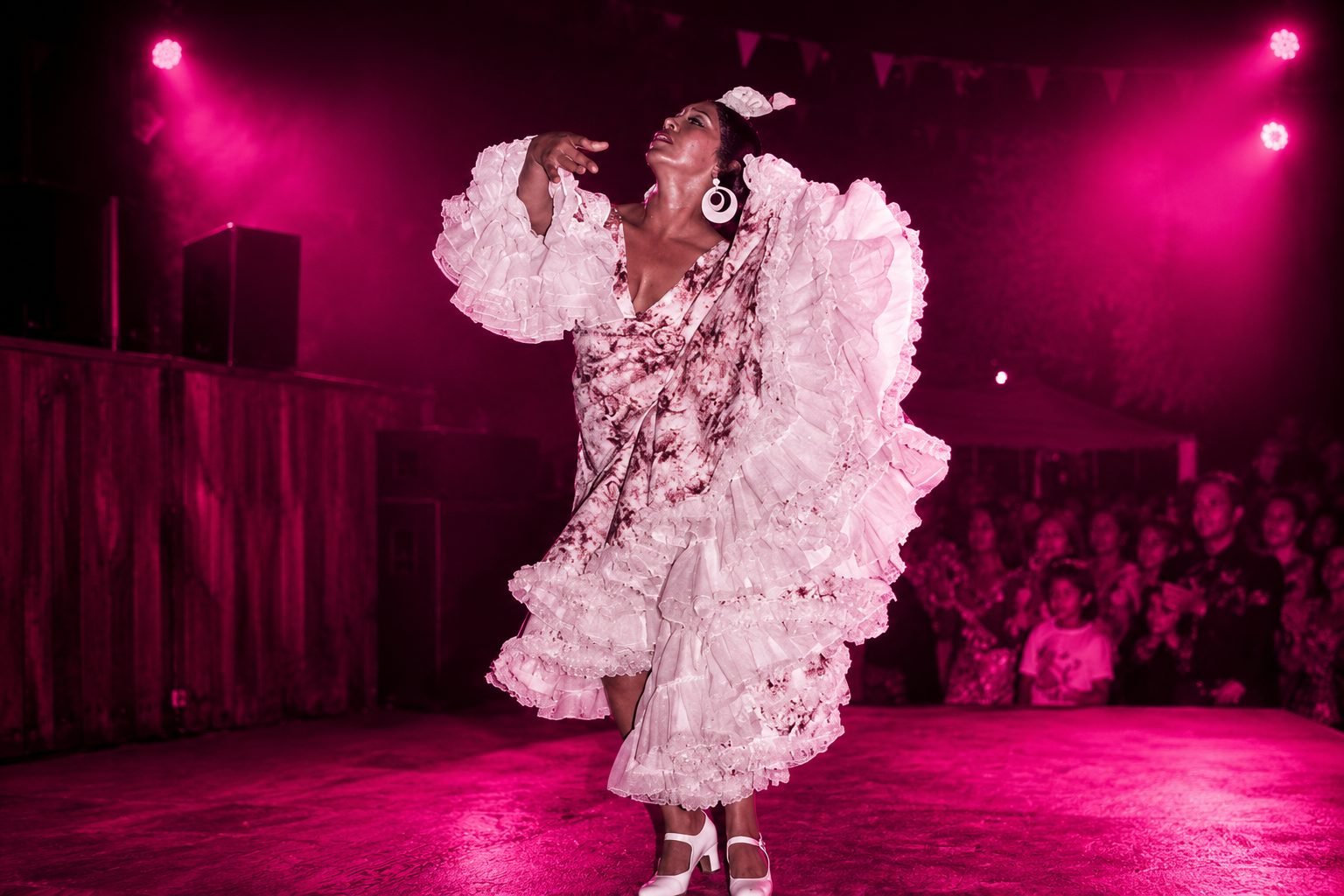
Teresa Champion recounts a life at the center of San Antonio’s flamenco history—from her return from Mexico City in 1954 and performances with guitarist Willie “El Curro” Champion to decades of teaching through the Teresa Champion Dance Academy. Her memories illuminate how family, migration, nightlife, community institutions, and artistic discipline created a distinctly San Antonio flamenco tradition.
Photo: Photographer unknown.
Watch the Teresa Champion interview → · Read the complete transcript →
Read Teresa Champion’s complete 2018 interview transcript
Interview conducted by Marco Aquino on September 5, 2018, at the Teresa Champion Dance Academy in San Antonio, TX.
Teresa Champion recalls bringing flamenco to San Antonio in 1954 and building a performing career with guitarist Willie “El Curro” Champion. Both appeared in John Wayne’s 1960 film The Alamo, and both worked with the José Greco Dance Company. Together, they became influential figures in San Antonio flamenco. In this 2018 interview, conducted ahead of Teresa’s 80th birthday, she reflects on her career, her students, and the city’s dance community.
Tell me about the work you do here at the Teresa Champion Dance Studio.
Well, I’ve been dancing and teaching for 47 years. But in this place, I’ve been here … I’m gonna say … the last 10 years in this place. I used to teach in that little house across the street. But then the owner said, “I’m going to build you a new studio because I’m going to rent the other house.” So, he built this place for me.
What do you do here?
I teach flamenco and folklórico but my specialty is flamenco. I was the first lady of flamenco here in San Antonio in 1954. They only used to dance folklórico, Spanish dancing, pasodobles and folk dance. But when I got here, I brought flamenco from Mexico. I went to Mexico in 1951 when I was 12 years old. I went to Bellas Artes—Bellas Artes in my time was a school of dance. I wanted to be a teacher but there was nothing here. I had to get my degree in Mexico City. When I came back, I went to Madrid, Spain.
When you teach your students, what is the biggest lesson that you try to give them?
Well, first the arms, to be graceful. I teach them how to walk really, how to move their skirts. Folklórico is so different from flamenco because in folklórico you do your arms up and flamenco is down (emphasis on lower body).
A lot of people get the two confused.
Oh, yes. Even in the movie The Alamo—I was in the movie The Alamo with John Wayne—and the dress I was wearing there is not a flamenco skirt, it was a folklórico skirt. But, it’s what they wanted. It was a cantina scene and they thought it would be perfect with the petticoats and all that but that’s folklórico. I don’t know why they picked that skirt, but you know what? Whatever they wanted … I was there to take directions. I did not furnish the costumes, Mr. Wayne did. Now, the shoes were mine, they were flamenco.
Is one of your goals to teach the difference between flamenco and folklórico?
Yes, flamenco originated in Spain and folklórico is from Mexico. We cannot forget that because we are Mexican even though some of us are born here. I’m of Mexican background, yo nací aquí. I was born here but my father was born in Mexico. He went to Monterrey with my aunts. He was there five years and then he crossed the border. My grandmother, my grandfather and my sister, they just walked without any papers. Getting here, my grandmother was pregnant, estaba embarazada, and she passed away and the baby did too. My grandfather buried my grandmother here, so we stayed here. My father was 7 years old. He grew up here and got married to my mother who was born in Lockhart, Texas. I was born and raised in San Antonio … on the West Side. Today they told me I’m going to be the grand marshal in a parade dieciséis de Septiembre on Guadalupe Street. It was an honor because I was born there on the West Side. One of the first theaters I performed at was the Teatro Guadalupe.
You were born Martinez?
Oh, my name is Teresa Martinez. But I was married to Willie “El Curro” Champion.
So how did you begin teaching flamenco?
I went to Mexico because I wanted to become a folklórico teacher. The little that I learned, folklórico and Spanish dancing, was with the nuns here.
The nuns did flamenco?
No, not flamenco, Spanish dancing and folklórico. I didn’t know flamenco. I didn’t even know what the word was. You would have asked me that and I would have said I didn’t know what that was … because I didn’t. My parents wanted me to go to catechism and have my first communion. Where the sisters were, they would teach dancing. So one day, I heard the castanets. They sounded like clicking and I said, “What is that!?” I went to the window and they had a lady there that volunteered and taught dance. Catechism and dance class were at the same time. But when I heard the castanets that day, I went to dance class instead. I started in the third line and two weeks later, I was in the front.
And that was here in San Antonio?
In San Antonio on Zarzamora Street.
So when you first started, there was no flamenco community anywhere in San Antonio?
No, there was Spanish dancing which is entirely different from flamenco. Flamenco is with guitar. Spanish dancing is with an orchestra or a record back then. Flamenco is with guitar, ok? The students here in San Antonio are very limited in guitar so my students dance flamenco at the Mercado with guitar but on CDs.
So … I originally went to Mexico City to become a folklórico teacher not a dancer. I was there maybe a month or two when I first heard flamenco guitar and again castanets. I’m attracted to the castanets. Up to now, that’s my love. So, I told my mother I wanted to become a flamenco dancer instead. She said, “We don’t have the money. It’s either you take flamenco or you take folklórico.” I thought about it and I picked flamenco. I love flamenco. I get chills when I hear flamenco music and sometimes I cry. It’s in me, flamenco is part of my life. I was the first person to bring flamenco to San Antonio in 1954 but I didn’t have a guitarist. So when I came back from Mexico I started dancing folklórico and teaching folklórico. I started dancing with the Paul Elizondo band and the Ramiro Cervera band. I started to tour with them.
How did you come to meet your husband?
When I first started dancing, my mother went to the courthouse to get a permit because we were dancing in nightclubs. I was a professional dancer at 12 years old, legal. My mother was very smart. She was going to make sure that nothing was going to stop my career, or get me hurt, or take me away from her or something like that. So when I started dancing, my (future) husband was in a trio called Los Cristales. My husband was 6 years older than me. He was 18 and I was 12 the first time that I saw him. He had two brothers and they played in a trio like Los Panchos but it was called Trio Los Cristales. My mother, after the show, saw that he played guitar and approached him. “Your name is Willie, right? You don’t know me but my daughter dances flamenco and we need a guitarist.” My husband goes, “What’s that?” My mother says, “It’s music that plays with guitar. My daughter would be dancing while you play the guitar.” My husband goes, “No ma’am.” The next show, my mother brings a Sabicas record and says, “Mira Mr. Willie, le voy a dar este disco. Apréndalo. Learn it please, so you can play for my daughter. We spent a lot of money on flamenco but she cannot use it because we don’t have a guitarist.”
For months my mother would ask, “Did you learn something Mr. Willie?” Then one day he said, “You know what? I’m going to learn one.” He wanted my mother to stop bothering him. After we had gotten married he said he thought my mother was crazy. My mother invited him to our house. My father had built me a room with a dance floor and mirrors. I started dancing malagueñas and he started playing.
My mother called the owner of a club and said, “Mr. Willie aprendió flamenco! I want you to see it! You’re going to love it!” The owner said, “Ok, whatever you want as long as Teresita dances.” When we finally performed we had a standing ovation. They had never heard flamenco because it was new in San Antonio in 1954.
What was the name of the nightclub?
Cuban Dinner Club. They always had dinner and a show. They had dinner, then a dance with Paul Elizondo, and then a show.
Where was that at?
It was on Flores where the Frost Bank is right now. On the corner of Travis and Flores streets.
Where Carmens de la Calle is now?
Yes, but about two blocks down. There was a beautiful nightclub and the owner was a Cubano. We got a standing ovation. When my husband saw that we were a big hit, he started learning more and more. He went to Mexico but took only two classes in Mexico City because it was too expensive.
So did Curro learn mostly by listening to records?
Yes, he was self-taught. When he went to Mexico, the teacher told him, “You’re doing it, but it’s wrong.” So the teacher showed him how to put his fingers and go up and down. He learned. When he came back, we became a success and everybody wanted us to dance.
When I turned 16, he asked me to be his girlfriend. I told him I never had a boyfriend before because I was 100 percent into the art. I had to ask my mother if I could go to the movies with him. She said yes. When I got married I was 16 and he was 22. We were married for 57 years. I just lost my husband 6 years ago. August 18th was six years ago. He had double pneumonia and he passed away.
What do you think made him different from other guitarists?
Well, he was the first one here and he taught a lot of boys here. We have a great guitarist right now but he’s in Spain. His name is Luisma. He is fantastic but he’s in Spain. When they are born over there, they know it all… But my husband was the first one here.
When they had auditions for the movie The Alamo, they called Curro. He didn’t have to audition. He was the only guitar player here. I told him to go, it’s a job. There was nothing between us where I would say, “No, you cannot go” or he would not tell me, “No, you cannot dance.” We were strictly show business 100 percent. All he did was play the guitar and all I did was teach and dance. Now, there are a lot of professional dancers but they are also teachers or secretaries or nurses. No, we were 100 percent show business. We bought our home through the art, we bought cars through our art, we supported our kids with the art.
When you hear Curro’s students perform, does that remind you of him?
Oh, yes! At Carmens de la Calle I start crying. There are too many memories. We were married for 57 years. He passed away on August 18th (2012) and our anniversary was August 28th. He was my first boyfriend. I grew up with him.
Who were some of his students?\ A lot of his boys left San Antonio to play somewhere else. They saw him and they wanted to play like Curro. Alejandro Herrera took classes with him … and Steve Arispe. After that, Curro didn’t want to teach too much because he was working at the Mansión del Rio. He was there for 45 years and more than 45 years at Fiesta Noche del Rio. We did their first show in 1957. Curro was there forever. I had to stop because I had to teach too many students. I was teaching out of my living room but then I had to get a studio. They called me to go work at Ballet Folklórico de San Antonio for two weeks. I said, “Mrs. Ramos (director Emma Ramos), I can’t teach for two weeks, I teach at my house.” But I ended up there for 12 years until her kids grew up and became teachers. They are still teaching and I was a dance teacher for them.
What about guitarist Christopher Arispe?
Arispe was playing for my daughter Elsa Champion when my husband got sick. We asked Chris if he could play at the Mansión del Rio for two weeks. My husband thought he would be out of the hospital in two weeks. I thought my husband would live forever. I thought I might go first and he would stay forever. We called Chris and asked if he could work for two weeks … he’s still there. He’s been there 6 years, two months. Sometimes it’s hard to get him because he works like Curro now.
Talk about some of your students who have gone on to have successful careers.
The students I’m going to tell you about were the best. Priscilla Treviño, they called her “La Presy,” she went to New York from here. From there, she went to Spain and she died in Spain. That’s not good … but she was one of the best dancers I’ve ever produced. Then, Ana Machado saw that Priscilla went and did good, so, then she went. Ana Machado got married in Spain and she had a stroke. But she went to Spain and made it in Spain. Then, there was Timo Lozano. He was very well known and he was the best dancer of bulerias. To get a class with him you had to spend the night on the sidewalk because he had so many students. Whoever was there first, that’s who he was going to take.
When Timo’s mother got sick, he had to come back from Spain. He moved back to Austin to take care of his mother who was elderly and had cancer, él la cuidaba. Well, one day, Timo got sick and got cancer and his mother buried him. I guess the lord called him to be here with his mother. He was with her for 3 or 4 years. His mother is still alive and he passed right after Curro so probably about 4 years ago. It’s one of those things that you just don’t understand. He came to take care of his mother and now his mother buried him. He was a tremendous dancer—a tremendous dancer.
Priscilla Treviño and Timo Lozano were my best students ever. They made it in the world, in Europe, in New York, everywhere they went. They never forgot me. They would call me, they would write me letters for Mother’s Day. Pero, se los llevó la muerte. Sometimes you just don’t understand. Like I said, uno pone, dios responde.
Can we talk about your scene in The Alamo? How did you get that opportunity?
I saw in the paper that they were doing auditions but they called Curro because he was the only guitarist in San Antonio. My father asked me why don’t I go with Curro. I said, “For what? They hired all the dancers from Parks and Recreation.” My father kept telling me to go, so I went but only to see John Wayne. Then my father tells me to take my shoes. I said, “Dad, they already have dancers!” But I took my shoes … just to see. My father said maybe one of the dancers will be late or not show up. We got in my husband’s car and drove to Brackettville.
John Wayne wanted to hear my husband and said, “If he’s not good then we will bring a guitarist from Spain.” But he liked my husband.
When John Wayne walked in the room he saw me and came straight to me. I got scared and thought he was going to throw me out. I had no business there. I didn’t even want to be there but my dad and Curro had insisted. He gets very close to me and asks, “What do you do?” I said, “I’m a dancer.” He goes, “How come you’re not over there with all the dancers?” I said, “I’m here with my husband, the guitarist.” He goes, “Oh, the guitarist is your husband!?” I said, “Yes Mr. Wayne, I’m just here because I wanted to see you.” He says, “Well, you’re gonna see a lot of me.” He turns and yells, “Antonia! I want her to be one of the dancers!” Antonia was one of the choreographers from Spain. She goes, “But Mr. Wayne, we already have all the dancers!” Mr. Wayne says, “Antonia! As I say! I want her to be one of the dancers! You know what? She’s going to dance on the table!” He liked my face, I don’t know what it was. He hired me, I didn’t have to audition.
When they showed me where I was going to dance I got scared. I looked at the table and said, “I can’t do it.” I told my husband, “I don’t think I can dance, I’m afraid of heights.” Curro says, “Do you want to live in the Casiano Courts all your life or do you want a house?” I said, “I want a house.” They put me on the table and I danced. Mr. Wayne goes, “If you do it good the first time then that’s it, but if we stop you, you’ll be here maybe 4 hours.”
What type of song was it?
It was a tangos. John Wayne picked me up by the waist and set me on the table. I said, “Teresa, do it right!” Up to this day, I’m afraid of heights. Yo no me subo ni a los ponies, nada de rides because I’m scared.
So it was all shot in one take?
One time. I made sure it was one time because I was scared! I said, “Lord give me the strength!” Because they told me we might be there for 3 or 4 hours. When I finished John Wayne said, “Perfect! We don’t have to do another take.” He brought me down and gave me a glass of water. How I was able to dance I don’t know.
There is a scene where you stomp your foot on the table and a guy jumps back. Was that planned?
Yes, that was part of the choreography. They told me to do that. It was fun
So did your appearance in The Alamo lead to other opportunities?
Let me tell you, when I did the movie The Alamo, they called me from everywhere!
I danced everywhere! I worked with Cantinflas…let me show you the pictures. I toured all over the world with José Greco
How long did you tour with José Greco?
About five years. My husband worked with him for 15 years as his guitarist.
What do you think is required from someone who wants to be a flamenco dancer?
To take classes for sure, that’s for sure. But also, to be a good person and to be down to earth. Some people tell me that I haven’t changed. Why should I change? I don’t have to change. I don’t envy anybody and I don’t care what anybody says. There is a dancer, Tamara Adira, who does a lot of modern dancing. One day I was in the audience and she goes, “Teresa, do you like what I do?” I said, “Do you like what you do?” She said, “I love it.” I said, “Then do it! You do weird things but that’s your style! Don’t let anybody stop you because they don’t like this or that. You don’t think I get criticized for being old and still teaching?” I’m going to teach until the lord tells me to stop. I love flamenco. I did it and I’m doing it because I like it. Nobody is going to tell me what to do. Like my husband always said, “You learn from the ones before you, and you teach the ones behind you.”
What are some of the emotions you go through when you are on stage dancing?
There is a word called duende. When it goes into you, you start doing things that … I don’t even know what I do. This lady came to me once and told me she wanted me to teach her daughter how to make faces. I said, “Lady, I don’t teach you how to make faces!” I don’t even know what faces I’m making when I’m dancing. The people who always dance the same, it’s because they’re only using technique. When you know how to dance and the duende gets into you, then you can do something else. When the duende gets into you, you go into another world. The duende will take you there. When you’re 100 percent into the art, the duende will come.
Contemporary Texas Flamenco
Olivia Chacón
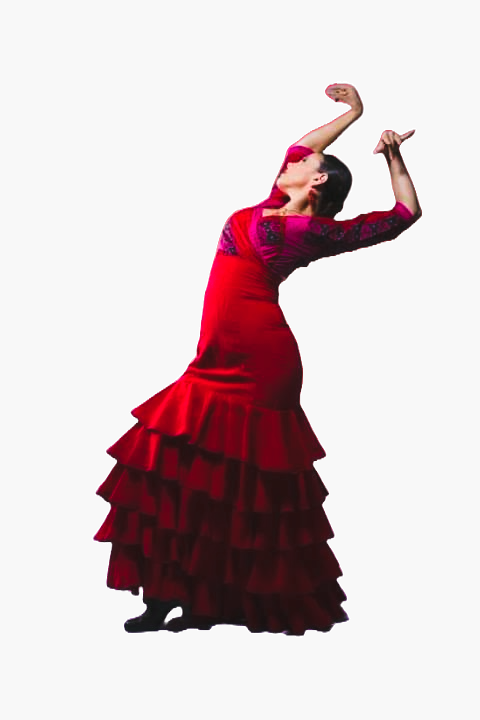
Olivia Chacón reflects on building A’lante Flamenco in Austin and developing original evening-length works such as Desplazados and Prophecies. The conversation traces her approach to choreography, ensemble building, displacement, and the challenge of creating contemporary flamenco in Texas while remaining accountable to the form’s musical and cultural foundations.
Photo: Kim Espinoza.
Read the complete 2015 Olivia Chacón interview
Olivia Chacón on Prophecies, tradition, and the flamenco communities of Texas
Archival interview · 2015 · Interview: Marco Aquino
In this previously unpublished conversation, Olivia Chacón, artistic director of A’lante Flamenco, discusses the company’s 2014 production Prophecies and its January 2015 San Antonio performances at the Carlos Alvarez Theatre. Inspired by Kahlil Gibran’s The Prophet, the production brought together traditional flamenco music, theatrical storytelling, and original choreography.
“San Antonio really is a cultural capital.” — Olivia Chacón
What is it about The Prophet that first caught your attention?
The Prophet is a book that I remember from college. A lot of people remember it from growing up. It was written in 1922 but it’s had many lives. A lot of generations have many connections to it. When I mention it people always say “Yes, there was a copy of it in my home as well.” The language is so poetic and for me, it was about the imagery that’s included. When I was first getting into flamenco and I read The Prophet again, I thought it could easily be made into a flamenco piece. I could just see those images in my head and see how they should be staged. So it’s been in the back of my head for many years. Finally, we got the opportunity to put this together.
In this new show you talk about the various traditions in today’s age. Do you consider your choreography to be more traditional or does it break away from tradition?
Well, I’d say that my approach is a little bit of both. Everything we do is always based in tradition. We do very few things that are not firmly rooted in tradition. In fact, in this piece we go back to some of the oldest flamenco music. Some things that are very obscure that people no longer hear. Much of it has gone out of fashion. I think it’s very important not to limit one’s self so even when digging into these traditions, we’ve found ways to innovate. Some of these dances, very few people have done them in recent years. So that’s one way in which we innovate. Also, I do believe that it is very important to be yourself in flamenco. Although we are always based in tradition, my teachers taught me that if you’re not being yourself and if you’re not adding something new, then there is no reason to present your work. You never want to be a copy of anyone else. So always, we’re looking for ways to do new and different things. For me, my main goal is to use flamenco as a language, as a medium to express myself. So however I need to do that, I’m going to get it done. I think that some of the flamenco traditions are not really meant to be limiting, they need to be used to achieve a goal.
What are some of those obscure elements you mention?
Well, for example, one of the pieces that I’m sure seems more modern to most viewers is one that is performed barefoot. The song this is set to is called a trillera. It’s a song for threshing wheat. This is a very old style of song, so nobody sings it anymore. It’s just a style of song that very few people use. It was something we wanted to rescue and it totally worked with The Prophet. The Prophet has a section on work or work in the fields. And of course I thought, “What does flamenco have to say about this?” Flamenco is born from agricultural people in Andalusia who were doing this sort of hard work. So that dance and the song, to some people, it may seem contemporary because it is so primitive. It doesn’t look like flamenco. So that’s what I mean by rescuing an obscure piece.
We also have a song that’s a Sephardic song. That’s the Jewish culture that was in Spain prior to 1492 when the Jews were expelled. That is something that’s at the root of flamenco. You know, flamenco came from this combination of Muslim and Jewish and European influences all mixing up at the same time in the same place. So we’ve tried to dig down a little bit and get beneath modern flamenco that’s kind of been limited to a smaller variety of music and dance.
Do you like performing in smaller venues or do you prefer doing the bigger productions in theatres?
I think I probably prefer dancing in a smaller venue because I love to see people’s faces and the reactions of the crowds. That’s still something very important to me and very much a part of what I do all the time. However, as a creative person, I loved seeing this production. We have done it a number of times, almost a year now, and I’m not ready to stop watching it. I love all the imagery. I love all the music. All the work that we put into it came to a good result. There is no better feeling than watching that happen onstage and letting that feeling take you into a different world. The world of the tablao, which is a small venue, is very personal and it’s very in the moment and I love to see the reaction from the audience but the world of theatre is a totally different thing. The audience can let themselves get swept away in the story that is being told. That to me is very exciting.
What’s the most exciting thing about taking a show on the road or to a different city?
The great thing is just to share it with new people who haven’t seen it before. We have wonderful supporters here in Austin. We really were able to broaden our audience in the past year. Last year, we did five evenings of this production at the Long Center. We were really able to reach a lot of people but at a certain point, Austin has a small flamenco community, it reaches a limit where people see it two or three times. So we really want to share it with more people. For the company, it’s great that we are able to do it again. I feel like every single time we present this we get better at it and we get more out it. Taking The Prophet to San Antonio, my hometown, is very exciting and a little bit stressful. San Antonio has such a strong flamenco community and I think even beyond that community, the population has such a strong appreciation not only for flamenco but for dance and for music. I know that they are a very informed audience. That’s going to be exciting for us.
I was surprised to learn that your dance studio Flamencura is the first dance studio in Austin dedicated to flamenco. Is Austin a little behind on the flamenco scene?
First of all, Austin is growing incredibly rapidly right now. But Austin, compared to San Antonio, always used to be a small town. A lot of the town was made up of people who are kind of visiting. We have the university and we have the legislature … Certainly, the town has been growing and growing and people are coming in from all over the world to become Austinites. So, the demographic is changing very rapidly. San Antonio is a larger city and an older city and it has always been more known to people outside of the city. I know all the way back to the early twentieth century, artistically, San Antonio has had a lot going on. Particularly with the connections to Mexico. San Antonio really is a cultural capital. Austin has not been, and hopefully, we are getting to be that way now. There have always been a few flamencos here in Austin trying to hold on but there has never been a large flamenco community here. San Antonio enjoys a lot of support from the City and various cultural institutions.
San Antonio is a bit more traditional
.
Well, in my experience I know that in Mexico, flamenco is very respected. People know what flamenco is just because they are more tuned into Spanish culture. It has always surprised me when I go to Mexico even people in small towns know what flamenco is. But here in Texas, especially places that don’t have as much Hispanic culture, people don’t even know how to say the word. They’ve never heard of it, they don’t know what country it’s from. So I think that connection that San Antonio has with Hispanic arts and culture has helped flamenco grow there. Then, people like Berta Almaguer who instituted the Spanish dance program at Parks and Recreation, that’s been a huge help. Families like the Champions and the Linares families have really kept that tradition going strongly. We’ve never had any groups like that here in Austin.
You have traveled to Spain. Can you talk about some of your experiences there?
I lived in Spain for a total of 5 years. I first went to Sevilla in 2001 and that was really an eye opener. My Spanish got much better. I had been dancing flamenco for several years already but it really showed me what true flamenco was. I was able to study with amazing artists like Farruquito and Juan Amaya. I saw all the shows, both large scale in theatres and in the tiny clubs where you get to meet people and hang out with the artists. So that was a huge eye opener for me and that showed me the whole flamenco way of life. When I did come back to the United States, I came back to Austin and I married my husband Isai Chacon who is the music director for Alante flamenco. Together, we went to Madrid in 2006. We gave up our day jobs and we went to fully immerse ourselves in flamenco. I decided that this was what I wanted to do and I wasn’t going to mess around with day jobs. I wanted to focus on flamenco and the only way to do that was to increase my knowledge. When I went to Madrid, I went to study at Amor de Dios Centro de Arte flamenco. There, I was able to spend every day studying flamenco for almost four years. I was invited to be in the company of Cristóbal Reyes who is the uncle of Joaquín Cortés, one of the most famous flamenco dancers in the world. I spent two years in Cristóbal’s company and we were able to tour all over Spain and Mexico and Cyprus. Then I spent a few months dancing in Germany in a club there. Honestly, it was very, very hard. It was wonderful but it was very tough. A lot of people think I was on vacation, but no, it was a lot of blood, sweat and tears, and very difficult work. It was really when I made myself a dancer. I was dancing every day and trying to get by and trying to gain new experiences every day.
You mention Isai Chacon. Can you tell me about some of the other performers in the group?
In this show, we have a total of six dancers and six musicians. In this show we have a number of artists who come from San Antonio. Karen Vilches grew up in San Antonio as I did. In our musicians, Lusisma Ramos is one of our two guitarists. He is from a town near Seville but he now lives in San Antonio. And of course, we have Chayito Champion of the Champion family who lives in San Antonio. I should also mention, we were given an award last year for Best Dance Ensemble by the Austin Critics Table but it was given to us with the stipulation that it was really for the whole group. It’s rare for dance ensembles to have their own musicians. For us as flamenco dancers, it’s imperative that we always use live music. We don’t use recordings and everything that the musicians do for us is customized. All of the music is original.
In fact, we are already working on our next production. We are really busy right now working on Desplazados which is really inspired by the experiences of all the members of our company. They all have fascinating histories, many of them are immigrants or are people whose lives have been informed by moving from place to place. We realized that this experience of immigration which is so prevalent in the media is really personal to us. Each one of our members has their own story about immigration or displacement in their own community. We will premiere Desplazados in Austin in the spring and look for a San Antonio date over the summer.
Editor’s note: This interview was conducted around the 2015 San Antonio performances of Prophecies. It is presented as an archival conversation; references to future productions and other events reflect the time of the interview. Lightly edited for spelling and punctuation.
Tablao and Community Memory
Jackie “La Morena” Rodriguez-Navar
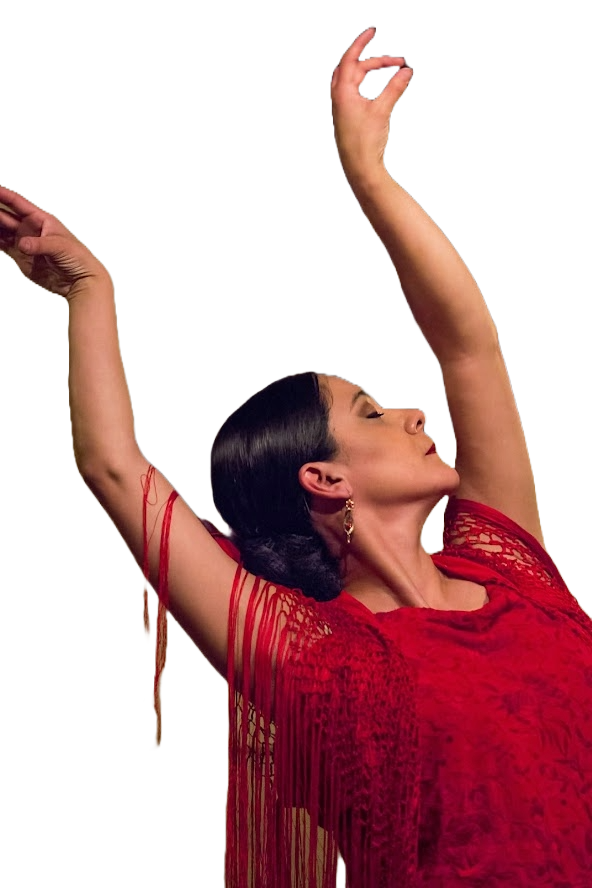
A 2021 archival feature traces Jackie “La Morena” Rodriguez-Navar’s two decades of performance at Carmens de la Calle, from her first solo appearances with guitarist Alejandro Herrera to the teachers, musicians, and audiences that shaped her artistic voice.
Photo: Matt Bynum.
“I actually grew up there. I became a woman there. I met my husband there. I went through college there while performing at Carmens. There was a huge evolution there for me.”
Jackie “La Morena” Rodriguez-Navar
About the Archive
WeFlamenco Fest’s oral-history initiative documents the artists, educators, musicians, organizers, and cultural spaces that shaped flamenco in Texas. The archive grows as interviews are recorded, restored, transcribed, and placed in context for future audiences. Place these voices within the larger story through our San Antonio flamenco history, browse related people in the Artist Index, and explore the city’s performance spaces in the Tablao archive.